

Vertex BD drives efficiency and retention in ITI Australia’s processing workflow
ITI Australia, the country’s largest independent timber wholesaler, has built Vertex BD into the backbone of its digital design and customer service workflow. Originally adopted to improve the flow of information between ITI and its frame and truss customers, the software has since evolved into the centre of a broader initiative called Design Link. As Hayden Slatter, Engineered Wood Products Manager, explains, “We now use it for a lot more of its export capabilities. Vertex BD has become the centre of this Design Link concept.”
Story originally published on Built Offsite
Case Study:
ITI Australia, the country’s largest independent timber wholesaler, has built Vertex BD into the backbone of its digital design and customer service workflow.
From design to delivery, Vertex BD drives process and customer value
ITI Australia, the country’s largest independent timber wholesaler, has built Vertex BD into the backbone of its digital design and customer service workflow. Originally adopted to improve the flow of information between ITI and its frame and truss customers, the software has since evolved into the centre of a broader initiative called Design Link. As Hayden Slatter, Engineered Wood Products Manager, explains, “We now use it for a lot more of its export capabilities. Vertex BD has become the centre of this Design Link concept.”

Hayden Slatter, ITI Engineered Wood Products Manager.
Day to day, the core remains familiar. “We’re still using the software for the same daily outcome—plans in design, specify materials, construction layouts,” he says. The change is what happens next: “We’ve extended our use of Vertex BD so it connects directly with our Hundegger software, supporting more of our processing requirements,” and “we are offering IFC outputs to builders.” For ITI Australia, “Vertex BD is very much in the middle of everything we do,” Slatter says. One example is how the software generates ready-to-use digital material schedules. Instead of customers re-entering long lists of timber products into their own systems, ITI can now send a universal file format that imports directly. “That saves our customers time,” he explains, and also reduces the risk of errors in quoting or ordering.
The practical effect is better coordination across mixed materials. “Everything just seems to go together a lot easier,” he says, because IFC models let steel and timber disciplines align before anyone is on the slab. “It’s linking everything together and that’s where the Design Link comes from.”
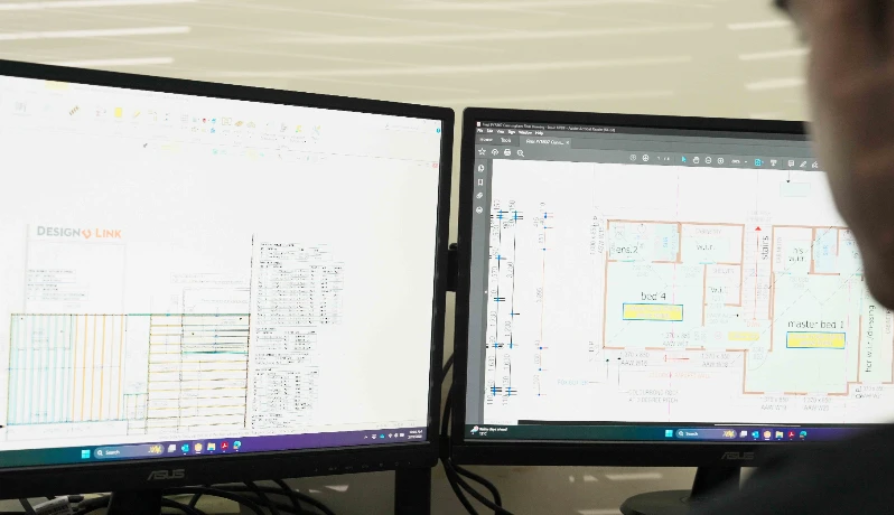
Vertex BD Showroom brings models to site
ITI Australia has broadened engagement from the office to the workface by using Vertex BD Showroom. Showroom is a feature that turns a 3D model into a QR code or link that can be opened on a phone, tablet, or laptop. Once scanned, the user can rotate, zoom, and explore the design in detail.
Slatter explains how Showroom brings designs to life on site: “We model the job and then create a QR code for the carpenter. The client can scan it, zoom in and out of the details, and understand exactly how it goes together. It can be something very technical in an IFC file for a steel detailer, or something very visual and straightforward for on-site trades—even apprentices.”
That accessibility has helped reduce phone calls from the site and cut the number of errors in interpretation. Builders and apprentices can now see what they are about to construct before lifting a tool. The result, Slatter explains, is that “everything is clearer, and jobs go together more smoothly.”
The digital flow continues into manufacturing: “Because we’re pushing things through the Hundegger saws now, we dock them to exact length. We don’t want trades picking up saws on site, we want them to just put it together.” The outcomes are tangible even when not fully quantified: “Safety, less mess, less waste,” he says.
Design Link’s published offer mirrors that end-to-end emphasis, combining Vertex BD Showroom 3D models, IFC and DWG sharing, universal file outputs for estimating systems, and pre-cutting and notching that land on site ready to assemble.
Vertex BD strengthens retention through process and precision
With market conditions tightening, ITI Australia has treated Vertex BD not only as design software but as a customer-retention engine. “Retention, retention, retention,” Slatter says. “When the market gets tight and our competitors come after them—you need to say, well, these are all the reasons you’re staying with us.” Once price is within a few per cent either way, value is proven in fewer delays and fewer coordination errors: “Here’s what we do to proactively prevent issues and delays on site, which cost everyone a fortune.”
In practice, ITI Australia shares rather than withholds information. As Slatter puts it, “The whole concept was not holding back the information we had. How do we make this information benefit others?” That approach reframes Vertex BD from an internal tool to a shared environment. When asked if it functions like a library clients can use, he replies, “One hundred per cent.”
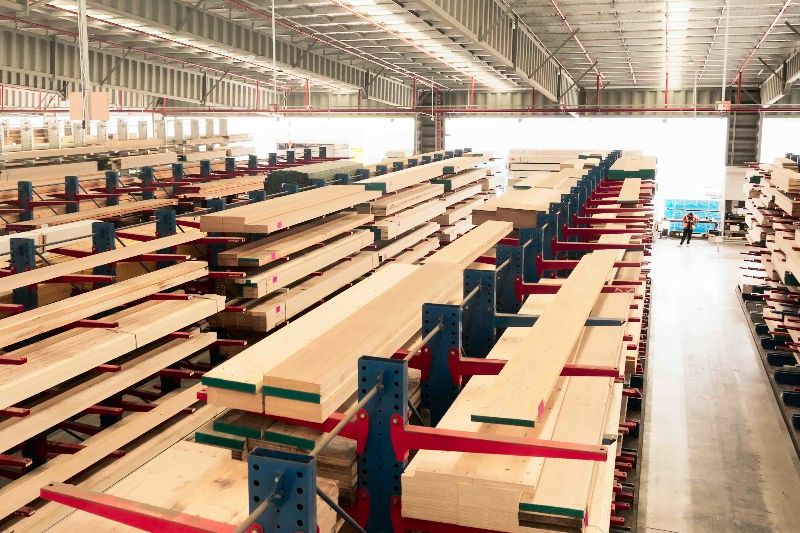
ITI Australia highlights its operations, supported by Vertex BD working behind the scenes to link digital design, manufacturing and site delivery for customers.
Digital precision with Vertex BD and Cambium processing
Linking design, inventory and processing has already reduced manual handling in the warehouse. “Vertex BD sits at the centre of our workflow, linking directly to our Hundegger saws through Hundegger’s CAMBIUM software,” Slatter says. CAMBIUM takes the digital files from Vertex BD and turns them into precise machine instructions—optimising cutting lengths, printing labels, and ensuring every component is processed accurately. “We wouldn’t be able to do it without Vertex BD. Now we have fewer errors coming out of the warehouse because everything is transferred digitally, with no room for interpretation.”
The flow is simple once set: “Done. One hundred percent complete, cut in the most efficient way possible.”
Next steps for ITI Australia and Vertex BD
The roadmap now focuses on structural design integration. “Next step is to integrate it with our ITI Design Spec engineering software,” Slatter says. The intent is model once, engineer once, then publish the right file for each stakeholder—builders, fabricators and trades—without re-keying. In short, Vertex BD remains the backbone while Design Link carries the service to site.
Across customer engagement, retention, and delivery certainty, ITI Australia has moved from generating layouts for trades to delivering model-driven information onsite — using Vertex BD to link design detail, production, and installation. As Slatter explains, “Vertex BD is at the centre of everything we do,” a role that makes the partnership feel less like a software purchase and more like an operating system for the business.
While Vertex BD is widely applied in light gauge steel manufacturing and design, it is increasingly being adopted for timber design and processing, a trend evident throughout Europe.
About the partners
ITI Australia
Exceptional people distributing the best in sustainable timber products across Australia
ITI believes its people are its greatest asset, and invests significantly in professional development and training programs – including a fully-accredited cadetship program – designed to upskill and empower the next generation of skilled workers.
With more than 200 Australian staff, and a further 250 staff employed at international locations including Chile, China, Indonesia and New Zealand, ITI’s award-winning team is proud to boast strong relationships with local and global supply partners and customers, built on a 31-year tradition of innovation, quality and trust.
Related stories
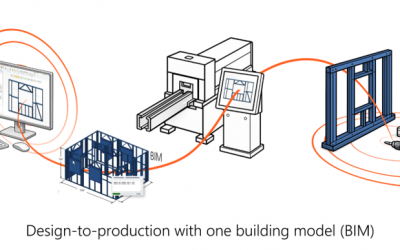
How to Scale a CFS Business from Design to Production
How to Scale a Cold-Formed Steel Business from Design to ProductionLight Gauge / Cold-Formed Steel manufacturing has enormous potential for industrialized construction. But adding roll-forming capacity alone does not create a scalable operation. The aim is to increase...
Vertex BD supports Steelcraft Group’s commitment to delivering precision house framing for Australia’s builders
Vertex BD supports Steelcraft Group’s commitment to delivering precision house framing for Australia’s builders integrated design technology and independent verification underpin one of Queensland’s most trusted framing operations.
Atlas Frames’ path from student housing to mastery in light gauge steel framing with Vertex BD
Atlas Frames’ path from student housing to mastery in light gauge steel framing with Vertex BD In collaboration with Vertex BD, Atlas Frames is carving a niche in efficient living spaces, marking a new direction for the business.