

Vertex BD helps SteelHaus simplify the complexity of modern construction
SteelHaus turns steel supply expertise into a digitally enabled manufacturing business with Vertex BD.
SteelHaus, based in Wiri, Auckland, has carved out a growing presence in New Zealand’s residential and commercial construction markets by applying light gauge steel (LGS) systems in a way that simplifies complex builds. At the core of its operations lies a commitment to high-quality manufacturing, hands-on builder engagement, and seamless digital integration. Vertex BD plays a pivotal role in helping SteelHaus deliver this package.
Story originally published on Built Offsite
Case Study:
SteelHaus
Ultimate Specialist in Steel Framing Solution for New Zealand.
From steel trading to integrated manufacturing and installation
SteelHaus was established out of a longstanding background in the steel supply sector. Originally operating as a steel trading business, the company recognised the opportunity to apply its knowledge and networks to the framing and construction space. “We decided to vertically integrate, combining supply with in-house detailing and installation,” explains Steven Cook, Business Manager. “That gave us tighter control over quality, timeframes, and how we support builders on site.”
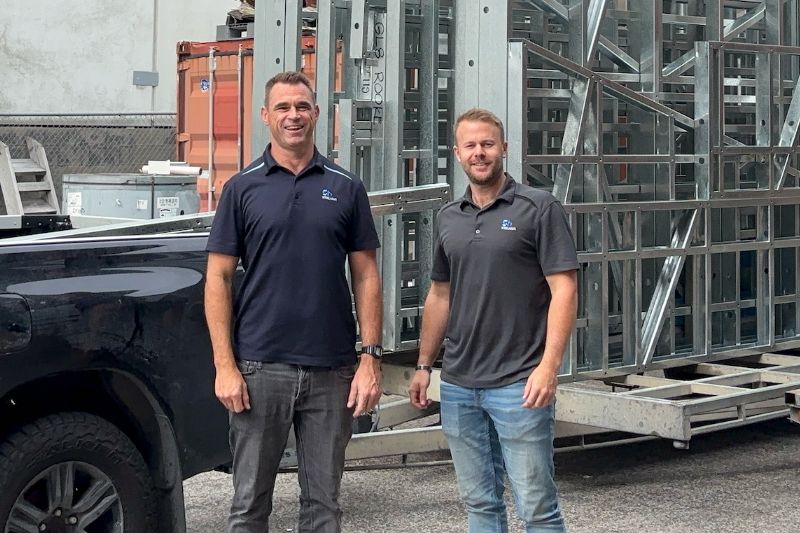
Delivering light gauge steel frames. Steven Cook, Business Manager (left), and Christiaan Faber, Senior Detailer (right), SteelHaus.
Expanding project capability across residential and commercial sectors
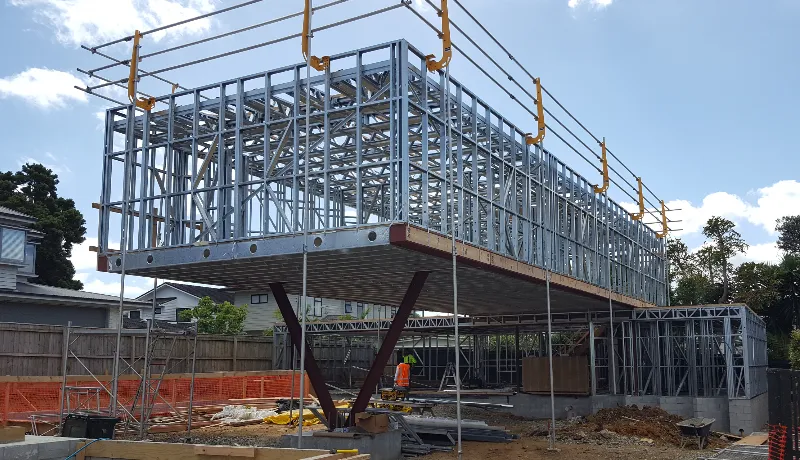
SteelHaus designs its framing components to be practical and straightforward to work with. Wall frames are pre-punched for services, which speeds up fit-outs for trades onsite. Long-span roof trusses reduce the number of internal load-bearing walls, giving architects and builders more design flexibility while cutting structural costs. EzyJoists are moisture resistant, light weight and install quickly, and they’re compatible with timber, steel and concrete structures. SteelHaus also produces ceiling battens and steel purlins that integrate easily with the rest of their framing systems.
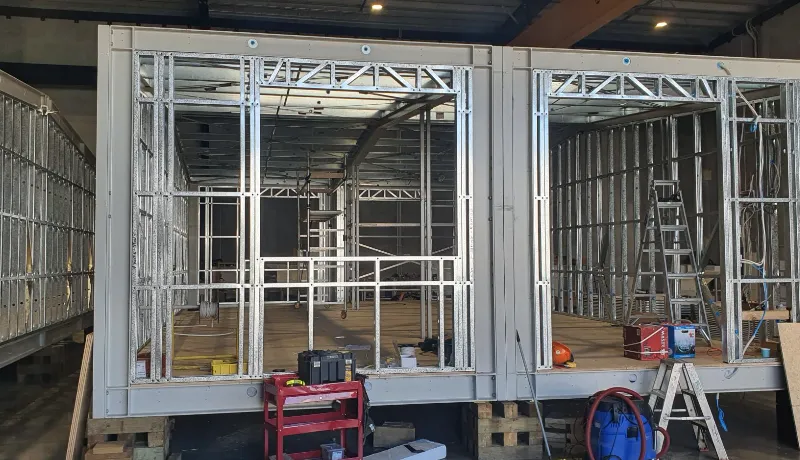
With projects ranging from large-scale residential developments to modular classrooms, transportable housing and various outdoor structures, SteelHaus has steadily diversified. Its frames are now used in architectural homes, warehouses, terraced housing, and a growing range of outdoor applications such as signage supports, outdoor kitchens, equipment shelters and custom garden structures.
Vertex BD as a foundation for smarter design and manufacturing
Crucially, the company has invested in both people and digital tools to drive its end-to-end approach. Early adoption of Vertex BD has shaped how SteelHaus collaborates across disciplines, from initial design through to onsite installation. “We adopted Vertex BD early because it offered the best path to integrate detailing and production from day one,” says Steven. “It gave us a consistent platform to build from, with a level of integration that supported coordination from day one.”
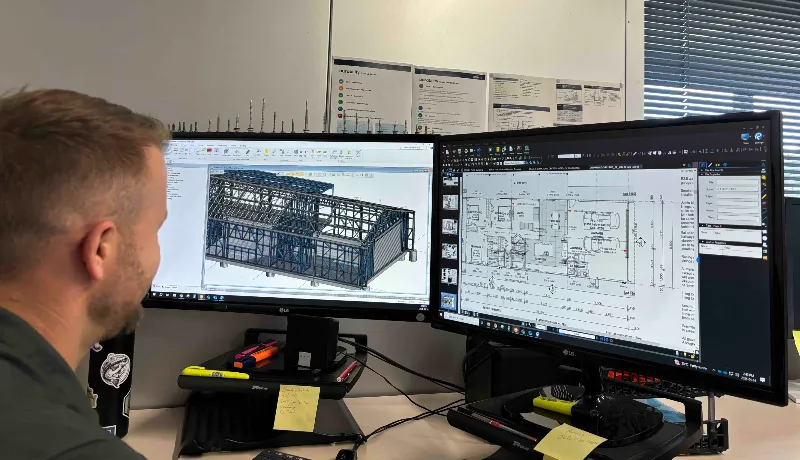
For SteelHaus, one of the key drivers in choosing Vertex BD was its ability to match the way builders actually work. “We needed a platform that could be shaped to fit the real-world demands of installation, not force installers to change how they operate,” says Christiaan Faber, Senior Detailer. “Vertex BD allows us to tailor the assembly order and automate service hole configurations, which means our detailing reflects what works best on site. That’s critical to maintaining efficiency.”
The ability to respond to feedback has been central. “That loop is critical,” says Steven. “If something doesn’t work onsite, it comes straight back to Christiaan. We update the connection details and it’s fixed next time. That level of control is only possible when your software and people are aligned.”
Design collaboration strengthened through IFC compatibility
Vertex BD has enabled SteelHaus to maintain a collaborative approach to project delivery. “Two years ago, hardly anyone sent us IFCs,” Steven notes. “Now it’s standard. Vertex BD keeps us compatible with the rest of the industry.”
According to Christiaan, the ability to work directly with IFC files has improved every stage of the project lifecycle. “Architects, engineers and fabricators all work from the same model, which cuts down on errors. The flash detection feature lets us track changes across disciplines—something you’d never get with 2D drawings.”
Scalability and product innovation through software flexibility
As the company expanded its offering, Vertex BD proved adaptable. “We keep adding products—joists, new profiles, different bracketry,” Steven explains. “With Vertex BD, we’re not locked in. We can control the output and refine it as we grow.”
Christiaan adds: “Vertex BD lets us align the software with how our builders actually work, not the other way around. That’s what makes it so powerful. We can tailor workflows to match real installation practices.”
Investing in tools that build confidence with clients
SteelHaus continues to explore how Vertex BD can support deeper client engagement and more responsive design. “Builders can view the model rather than wade through 30 pages of 2D plans,” Christiaan says. “It’s faster, and they know exactly what’s coming. It’s that kind of visual clarity that wins people over.”
Steven agrees: “The more we can show builders and clients what steel offers—and back it with digital tools like Vertex BD—the faster we can build smarter. Vertex BD isn’t just a tool. It’s part of how we deliver precision, reduce rework, and save time across every part of the business.”
Christiaan concludes: “Vertex BD isn’t just detailing software for us. It’s a core part of how we communicate, design and manufacture. We build better because we use it—and we use it because it helps us think and work ahead of the curve.”
Related stories
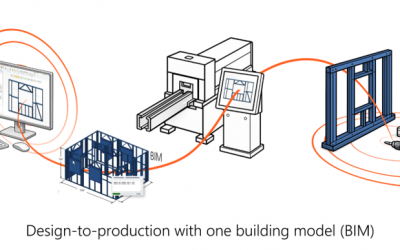
How to Scale a CFS Business from Design to Production
How to Scale a Cold-Formed Steel Business from Design to ProductionLight Gauge / Cold-Formed Steel manufacturing has enormous potential for industrialized construction. But adding roll-forming capacity alone does not create a scalable operation. The aim is to increase...
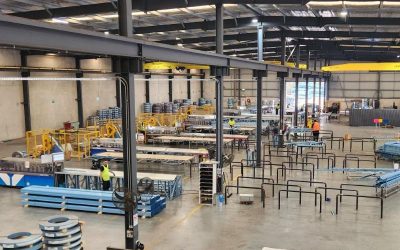
Vertex BD supports Steelcraft Group’s commitment to delivering precision house framing for Australia’s builders
Vertex BD supports Steelcraft Group’s commitment to delivering precision house framing for Australia’s builders integrated design technology and independent verification underpin one of Queensland’s most trusted framing operations.
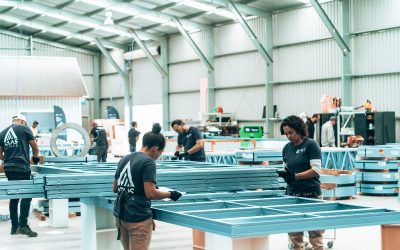
Atlas Frames’ path from student housing to mastery in light gauge steel framing with Vertex BD
Atlas Frames’ path from student housing to mastery in light gauge steel framing with Vertex BD In collaboration with Vertex BD, Atlas Frames is carving a niche in efficient living spaces, marking a new direction for the business.